Open every day
Mon. Tue. Thu. Fri.: 10:00 AM - 5:30 PM
Wed. Sat. Sun.: 10:00 AM - 6:00 PM

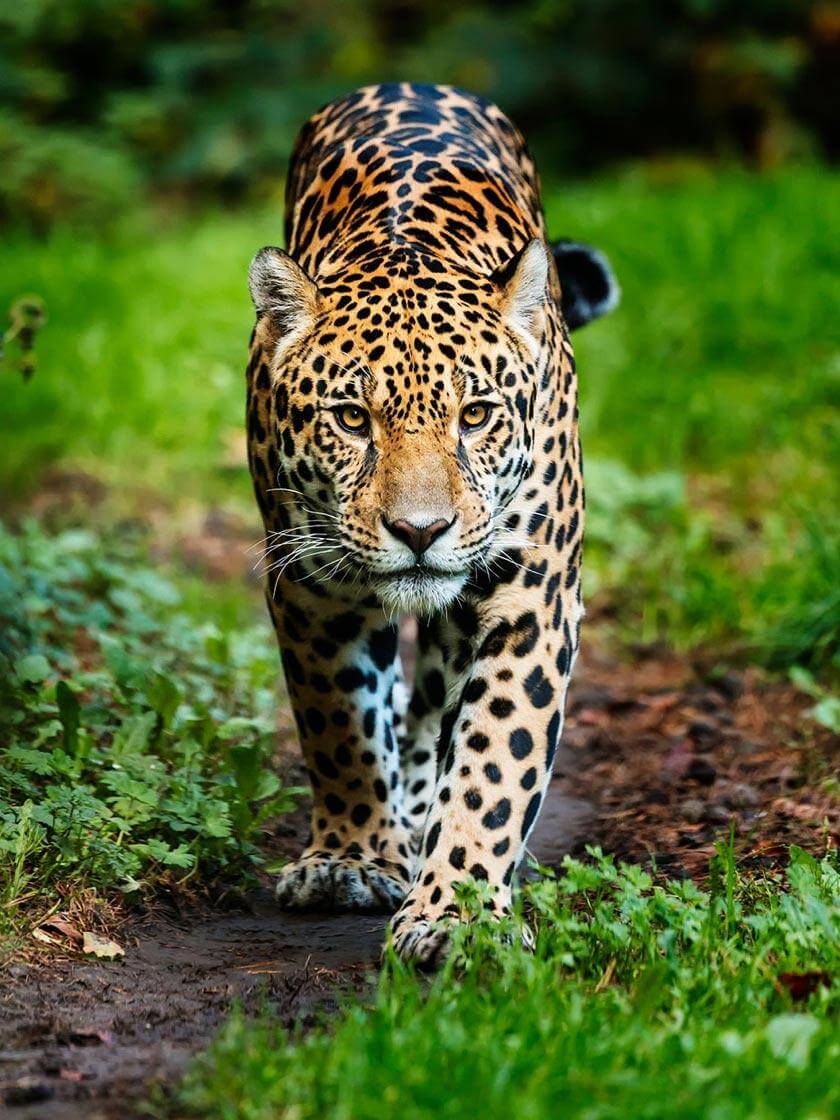
Jaguars typically live in tropical and humid regions with extensive forests, as well as in wooded savannas and mangrove swamps.

Argentina, Belize, the Plurinational State of Bolivia, Brazil, Colombia, Costa Rica, Ecuador, Guatemala, French Guiana, Honduras, Mexico, Nicaragua, Panama, Paraguay, Peru, Suriname, the United States, Venezuela.

Head and body: 1.20–1.70 m
Tail: 40–80 cm

♂ 40–120 kg
♀ 30–100 kg

10–12 years in the wild
20–25 years in captivity

93–105 days

Carnivore

Conservation and Breeding Program at Wildlife Parks

La liste rouge mondiale de l’UICN des espèces menacées
Depuis les années 1960, l’Union Internationale pour la Conservation de la Nature publie la Liste rouge des espèces menacées. Les espèces sont classées dans des catégories indiquant le degré de menace auquel elles sont confrontées.
List the species that have not yet been assessed against the Red List criteria.
Includes species for which the best available data are insufficient to determine, either directly or indirectly, their risk of extinction.
List the species that are at low risk of extinction in the region in question.
Includes species that are close to meeting the quantitative thresholds for threatened species and that could become threatened if specific conservation measures are not taken.
Includes species threatened with extinction. Relatively high risk.
Includes species threatened with extinction. High risk.
Includes species threatened with extinction. Very high risk.
Refers to species that survive only in captivity or as part of a naturalized population.
A species of which there is no doubt that the last individual has died.
Jaguars were considered divine creatures in many South American cultures. Archaeologists have found numerous depictions of the jaguar in the art and history of Colombian tribes. Their name “jaguar” comes from the word “yaguar,” which is said to mean “one whose leap is capable of killing.” A well-deserved reputation, as the jaguar’s agility and strength make it a particularly dangerous predator.
Before the 19th century, jaguars could be found in the southern United States, from Texas to California. The arrival of American settlers reduced the jaguars’ habitat through “anti-predator” measures intended to protect the population. Today, a few big cats can still be found in Arizona, a state that could become a conservation hub for the species as global warming pushes jaguars northward.
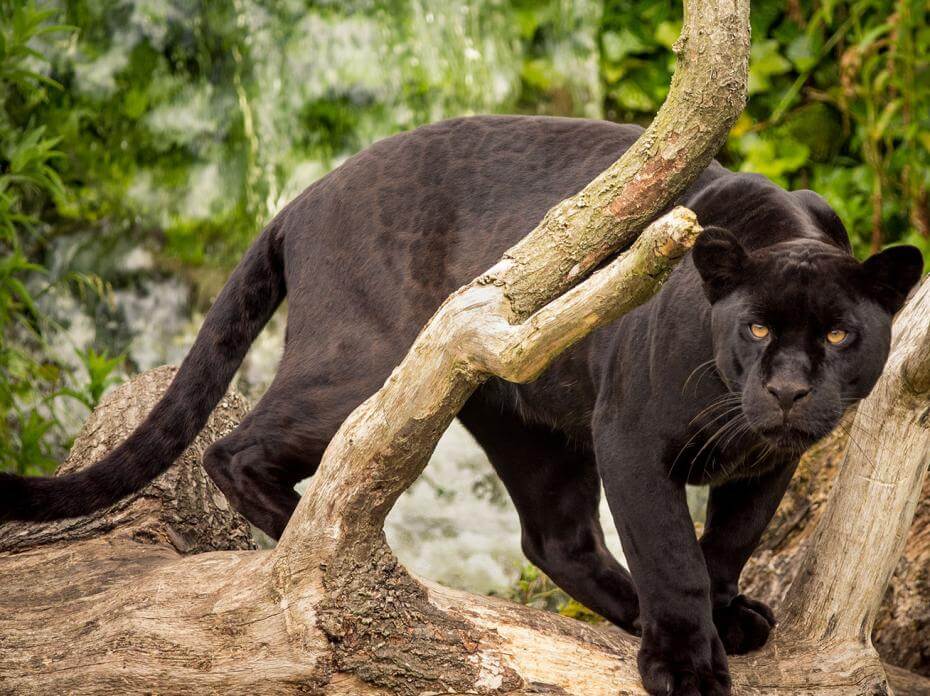
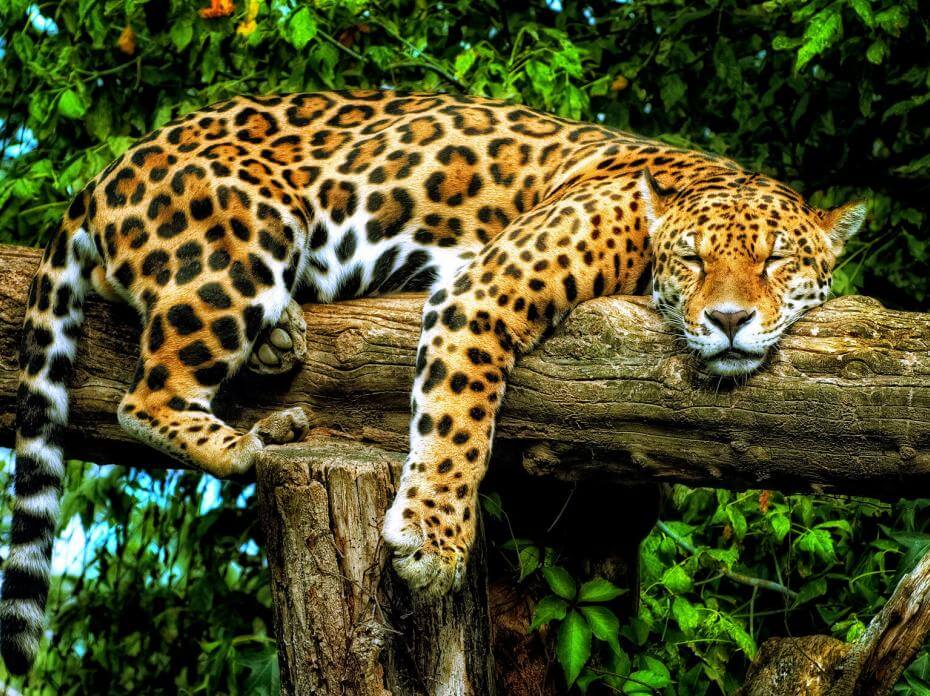
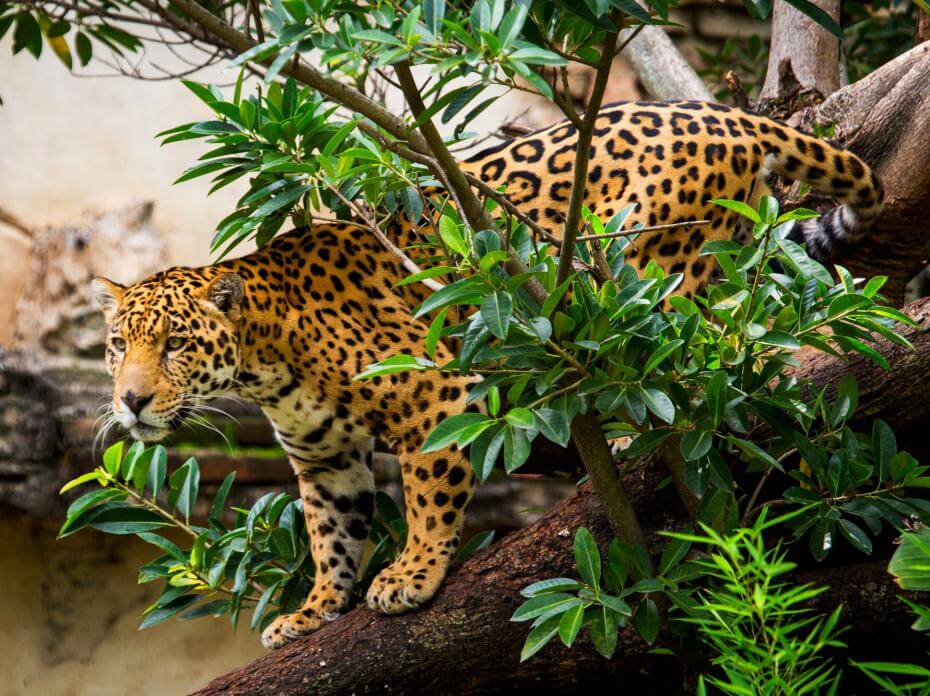
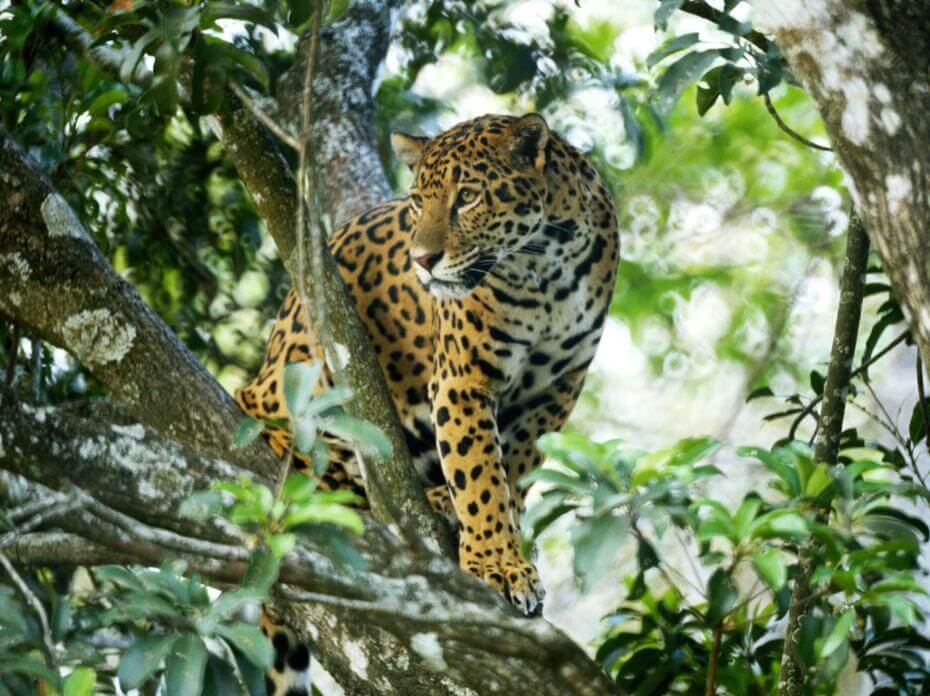
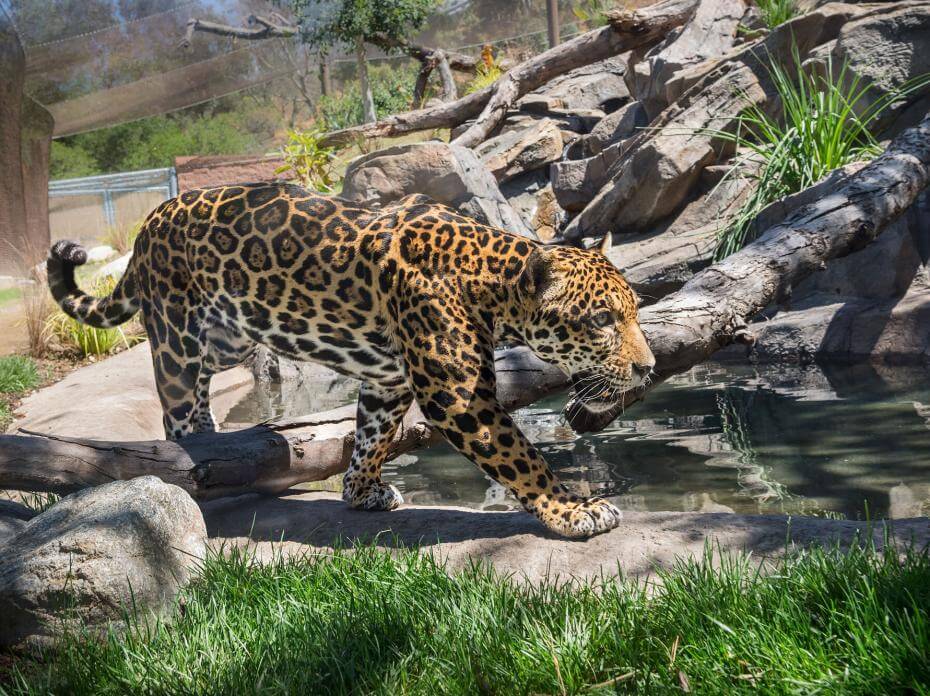
The jaguar is one of the largest cats in the world, second only to the tiger and the lion. With their spotted fur, they closely resemble their leopard cousins, which live in Africa and Asia. Their coat color ranges from yellow to orange and features spots with black outlines called “rosettes.”
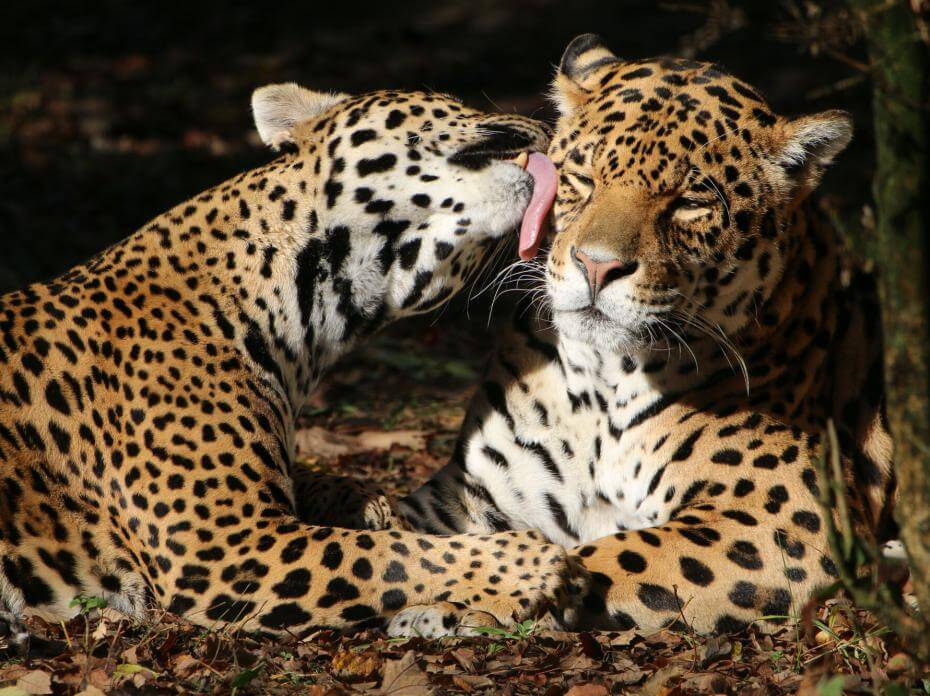
Jaguars prefer to live alone. They gather with other jaguars during mating season or to raise their young. This large predator is an exceptional hunter, as agile on land as it is in water. An excellent swimmer, it is often found near rivers because it loves fish, turtles, and even alligators. The jaguar is mainly active after dark. Like its smaller cousin, the cat, it is very active at night.
During the breeding season, from August to September, jaguars can mate up to 100 times a day. After a 14-week gestation period, the female gives birth to a litter of one to four cubs. At birth, jaguars are born with their eyes closed; they begin to see after two weeks. At six months of age, their mother teaches them to hunt. At two years old, they become independent and leave the family home to live their own lives.
The jaguar is now an endangered species. The gradual loss of its natural habitat, combined with the illegal trade in big cats, has led to an alarming decline in jaguar populations over the past few decades.
Deforestation is a real scourge for this species, which now finds itself scattered across small areas. Deprived of food, jaguars turn to livestock and are often hunted by farmers seeking to protect their herds.
Finally, they are also targeted by poachers who sell jaguar teeth and bones in China, where they are believed to have medicinal properties.