Il parco è aperto tutti i giorni, anche il 1° novembre
dalle 10:00 alle 17:00

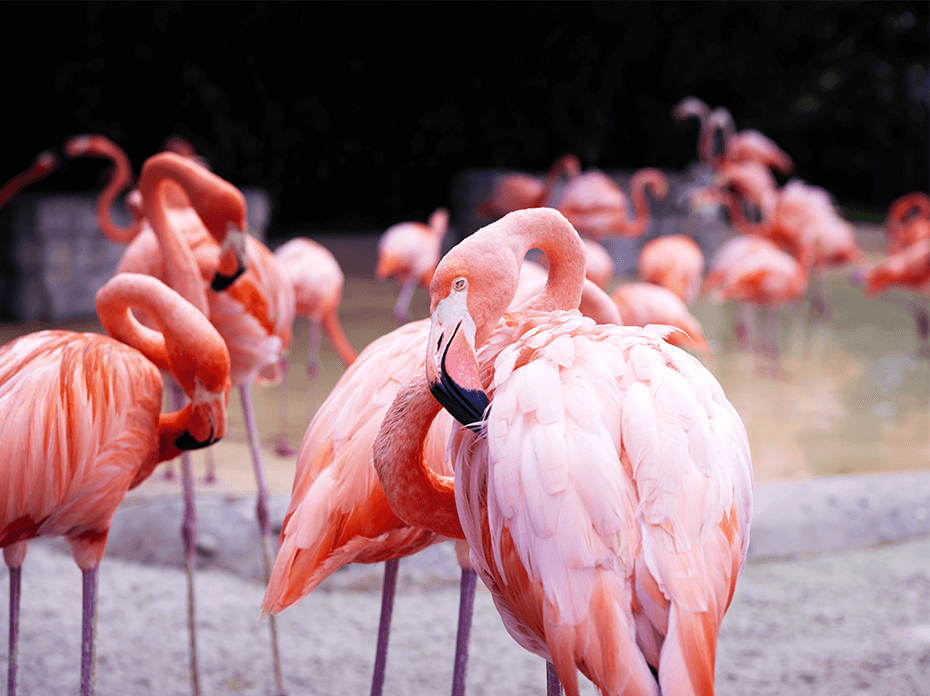
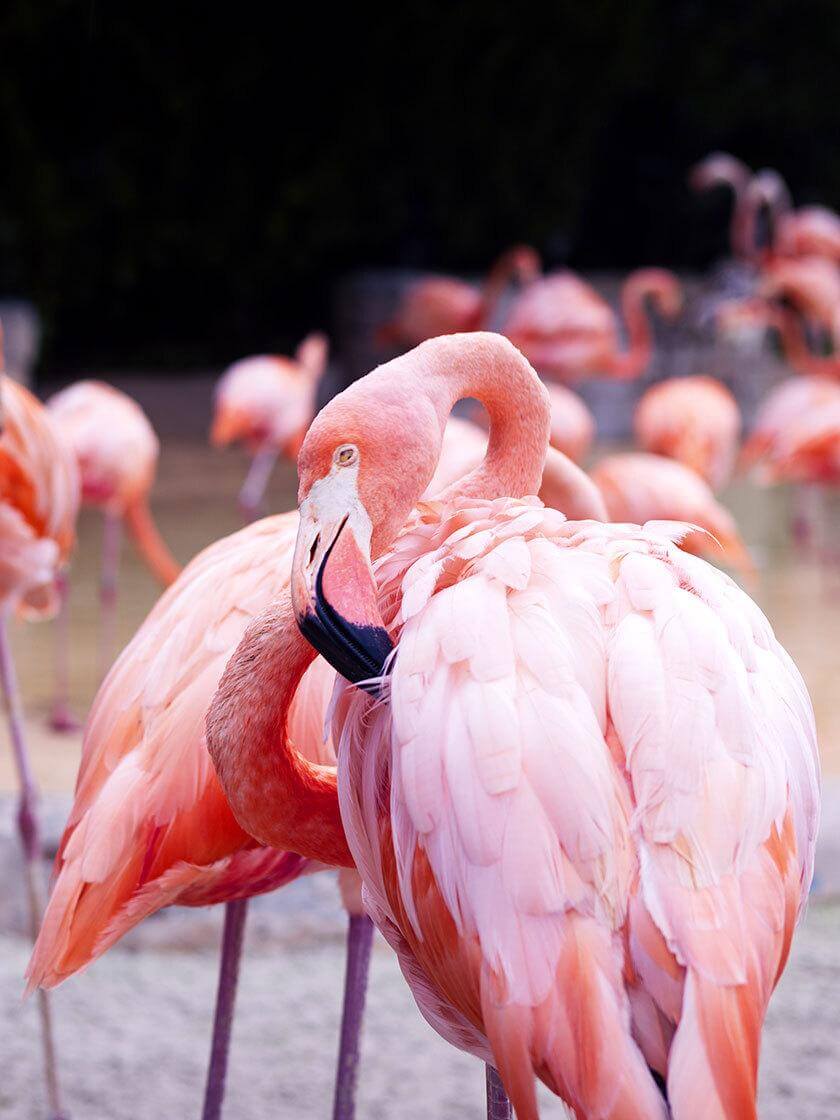
Fenicottero dei Caraibi
Phoenicopterus ruber
Classe: Uccelli
Ordine: Phoenicopteriformes
Famiglia: Phoenicopteridae
Habitat naturale
Questo uccello vive nelle zone umide: laghi, paludi ed estuari del Sudamerica
Regione di origine

South America
Bahamas, Cuba, Repubblica Dominicana, Ecuador, Haiti, Messico, Repubblica Bolivariana del Venezuela, Caraibi
Caratteristiche

Dimensioni
:
120 - 145 cm
Apertura alare: 150 cm

Peso
:
2 - 4 kg

Longevità
:
50 anni in cattività

Incubazione/Deposizione delle uova
:
25 - 30 giorni
1 - 2 uova

Dieta
:
Pescivoro
Statut de conservation UICN

La liste rouge mondiale de l’UICN des espèces menacées
Depuis les années 1960, l’Union Internationale pour la Conservation de la Nature publie la Liste rouge des espèces menacées. Les espèces sont classées dans des catégories indiquant le degré de menace auquel elles sont confrontées.
NE
Not rated
List the species that have not yet been assessed against the Red List criteria.
DD
Insufficient data
Includes species for which the best available data are insufficient to determine, either directly or indirectly, their risk of extinction.
LC
Minor concern
List the species that are at low risk of extinction in the region in question.
NT
Near Threatened
Includes species that are close to meeting the quantitative thresholds for threatened species and that could become threatened if specific conservation measures are not taken.
VU
Vulnerable
Includes species threatened with extinction. Relatively high risk.
EN
Endangered
Includes species threatened with extinction. High risk.
CR
Critically endangered
Includes species threatened with extinction. Very high risk.
EW
Extinct in the wild
Refers to species that survive only in captivity or as part of a naturalized population.
EX
Off
A species of which there is no doubt that the last individual has died.
NE
Not rated
DD
Insufficient data
LC
Minor concern
NT
Near Threatened
VU
Vulnerable
EN
Endangered
CR
Critically endangered
EW
Extinct in the wild
EX
Off